How to Choose a Snack Vending Machine for Your Business?
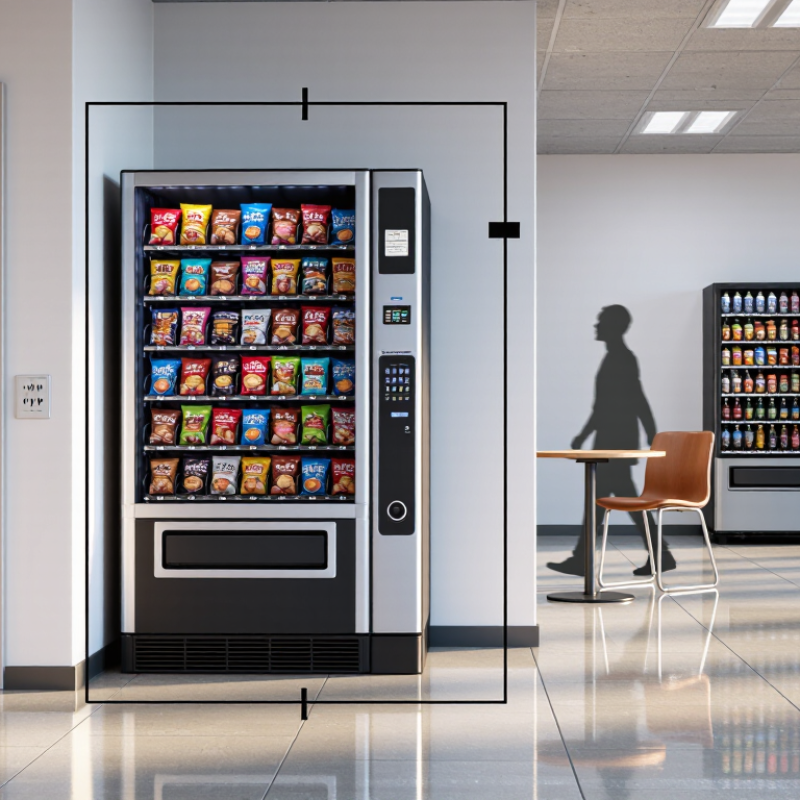
Choosing a snack vending machine is less about its polished exterior and more about whether it fits the daily rhythm of your business. A model near a busy office entrance may need fast checkout, flexible product slots, and enough capacity to avoid frequent restocking. A machine in a smaller break room may benefit more from a compact footprint and simple controls. The right choice starts with real conditions: foot traffic, available space, power access, and who will refill the shelves.
Measure the location before comparing machines. Check doorway widths, outlet placement, lighting, and the path employees or customers take. Then estimate demand using realistic sales patterns, not a best-case guess. Product variety matters, but so does temperature control for items that require it, payment reliability, inventory visibility, and access for maintenance. Ask suppliers about warranty coverage, service response times, spare parts, and the cost of replacing components. Small details count. A jammed spiral at lunchtime can frustrate customers and create extra work.
A useful buying principle is: “Choose the machine your team can keep stocked, clean, and working—not simply the one with the most features.” I can’t responsibly attach that original line to a named snack vending machine expert without a verifiable source. A credible expert quotation should be checked against an interview, publication, or company profile before use. This guide therefore focuses on practical selection criteria, including capacity, payment options, product fit, operating costs, and service support. It also leaves room for a less comfortable question: will the machine still make sense when sales are slower than expected?
Assess Location and Demand Against NAMA’s Estimate of 5 Million U.S. Vending Machines
NAMA estimates that roughly 5 million vending machines operate across the United States. That figure gives buyers useful scale, but it does not show whether a particular break room can support another machine. A busy hospital corridor and a quiet office lobby are not equal markets. Visit the site during actual break periods. Count foot traffic, note nearby food options, and ask staff what they would buy. Small details matter: a long walk to lunch may make cold drinks and quick snacks more appealing. The estimate is a starting point, not a sales forecast.
Compare those observations with published spending data. The U.S. Bureau of Labor Statistics’ 2023 Consumer Expenditure Survey reported average annual household spending of $3,933 on food away from home. That broad figure is not vending-specific, so treat it carefully. It cannot predict how many bags of chips a single site will sell. Still, it helps frame local conversations about convenience and food budgets. Track traffic and purchases over several weeks, then adjust the product mix. A machine count is blunt. I would not choose equipment based on national totals alone; even a careful site estimate can be wrong.
How to Choose a Snack Vending Machine for Your Business?
Assess Location and Demand Against NAMA’s Estimate of 5 Million U.S. Vending Machines
Population can help indicate the scale of a potential customer base, but it does not measure foot traffic or vending demand at a specific site. Use it as a starting point, then assess daily visitors, dwell time, nearby food options, and likely snack preferences. State population figures are 2023 U.S. Census Bureau estimates; the national vending-machine figure is NAMA’s estimate cited in the title.
Choose Machine Capacity for Your Expected Sales and Restocking Frequency
A snack machine should match how quickly products sell, not just how much space is available. Review sales by item and day, then estimate demand between restocking visits. Start with real numbers. For example, if a workplace sells about 18 snacks each weekday and is restocked every three days, plan for roughly 54 sales before the next visit. Add a modest buffer for busy days, but avoid filling every slot with slow-moving products.
Capacity also depends on package size and product mix. A machine holding 300 small bars may fit far fewer bags of chips or bottled drinks. Check the actual shelf layout, including coil width and product depth, before relying on the stated capacity. Leave some breathing room. Overfilling can cause packages to catch or drop poorly, while too little stock can leave popular choices unavailable.
Restocking frequency should reflect staff time, travel, and how quickly items approach their best-before dates. If visits are weekly, compare expected sales for seven days with usable capacity for each product, not only the machine’s total count. Track empty slots and leftovers for a few weeks, then adjust the order quantities. That estimate may miss. Events, weather, or schedule changes can shift demand, so a simple sales log is often more useful than a perfect-looking forecast.
Compare Payment Options: Cantaloupe Reports Cashless Payments Led 75% of 2023 Vending Sales
When choosing a snack vending machine, check how customers can pay before comparing cabinet size or display features. The 2024 Micropayment Trends Report found that cashless payments accounted for 75% of vending sales in 2023. That matters. A card reader and mobile-wallet support can help customers buy quickly when they have no coins.
Still, the figure is an industry-wide measure, not a forecast for every location. A machine in a busy office may see different payment habits from one in a small workshop. Watch how people actually pay during a trial period. I would not assume cash has disappeared; some customers still prefer bills and coins. A cashless-only setup could lose those sales.
Compare more than payment types. Ask about transaction fees, cellular or Wi-Fi requirements, and what happens during a network outage. Check whether the machine can report sales by product and payment method; those records can show whether a popular snack needs faster restocking. Small details count. For example, test a tap payment with the machine door closed and confirm that the receipt or screen clearly shows a completed purchase. The report offers a useful benchmark, but local sales data should guide the final choice.
Check Accessibility and Compliance: ADA Reach Ranges from 15 to 48 Inches
When choosing a snack vending machine, check the controls—not just the display height. The U.S. Access Board’s 2010 ADA Standards specify a forward reach range of 15 to 48 inches for accessible operable parts. That range applies to the buttons and payment interface, not automatically to every part of the machine. The same standards call for a clear floor space of at least 30 by 48 inches, allowing a wheelchair user to approach. Small details matter. A deep control panel, nearby wall, or raised curb can affect access, so verify the installed layout rather than relying only on a product drawing.
Before purchase, measure from the finished floor to the highest frequently used button. Check that a seated customer can reach it without leaning across a shelf or twisting around a side panel. The Access Board’s reach criteria also change when an obstruction limits approach; a counter or deep recess can reduce the usable reach. Test it in place. I would include the machine’s final position, nearby queue space, and door swing in the site review. These checks may feel overly cautious, but a few inches can determine whether customers can select and retrieve a snack independently. This is practical planning, not a substitute for confirming applicable accessibility requirements with a qualified professional.
| Accessibility Check | Relevant Measurement | What to Verify When Choosing a Machine | Practical Check |
|---|---|---|---|
| Unobstructed forward reach | 15–48 inches above the finished floor | Operable parts, such as selection buttons and payment controls, must be within the applicable reach range when the approach is unobstructed. | Measure to the center of each control from the finished floor; check the lowest and highest selections. |
| Forward reach over an obstruction | For an obstruction no deeper than 20 inches, the maximum high reach is 48 inches. If the obstruction is more than 20 inches and no more than 25 inches deep, the maximum high reach is 44 inches. | A counter, ledge, or machine feature between the user and a control can reduce the allowed high reach. | Measure both the obstruction depth and the control height. Do not assess height alone. |
| Unobstructed side reach | 15–48 inches above the finished floor | Controls reached from a parallel approach should fit within the applicable side-reach range. | Check that the approach is genuinely alongside the control and that no feature blocks access. |
| Side reach over an obstruction | Where the obstruction is no more than 10 inches deep, the maximum high side reach is 48 inches. For an obstruction over 10 inches and up to 24 inches deep, the maximum is 46 inches; the obstruction height may not exceed 34 inches. | Assess the depth and height of any shelf, counter, or projecting feature in front of a side-reach control. | Use the applicable ADA reach-range conditions for the actual approach and obstruction. |
| Clear floor space and approach | At least 30 × 48 inches for a clear floor space, subject to applicable access requirements | Allow a wheelchair user to approach the machine and position close enough to reach its controls. The space may overlap an accessible route where permitted. | Check the installed location, nearby furniture, door swings, and queuing area—not just the machine dimensions. |
| Operable parts | One-hand operation; no tight grasping, pinching, or wrist twisting. Operating force: 5 pounds maximum. | Buttons, payment interfaces, and other controls should be usable without requiring a tight grip or excessive force. | Test controls in person where possible, including the force needed to activate them. |
| Product retrieval | Evaluate the actual opening, reach, and installed configuration | Check that the pickup area can be approached and used without avoidable barriers. The reach rules for operable parts do not by themselves establish that every product-retrieval feature is accessible. | Test retrieval with the machine installed at its intended location and review applicable accessibility requirements. |
| Compliance review | Apply the relevant provisions of the 2010 ADA Standards for Accessible Design and applicable local requirements | Reach ranges depend on the direction of approach and whether an obstruction is present. Building conditions and other applicable rules may also affect the installation. | Confirm the specific machine layout and site conditions with a qualified accessibility professional or the authority having jurisdiction. |
Calculate Total Ownership Costs and FDA Labeling Rules for Operators with 20+ Machines
For a business running 20 or more vending machines, purchase price is only the first line in the budget. Track freight, installation, card-reader fees, connectivity, repairs, product spoilage, commissions, and electricity across the machine’s expected service life. The U.S. EPA reports that certified refrigerated vending machines use about 40% less energy than standard models, potentially saving roughly $150 per machine each year. That estimate is a useful benchmark, not a promise; room temperature, door openings, and local power rates change the result. Measure a real site if you can. Your spreadsheet may still miss something.
The FDA’s vending-machine calorie-labeling rule applies to operators who own or operate 20 or more machines. Under 21 CFR 101.8, calorie information generally needs to appear before purchase, such as beside the selection button or on a digital display. A visible package label may meet the requirement in qualifying situations, but check the FDA’s guidance for your machine layout. Budget for signs, display updates, and staff checks. NAMA’s 2023 State of the Industry report estimated U.S. convenience-services sales at $26.6 billion in 2022; that broad figure shows the sector’s scale, not the profit margin of one route. Count labeling work as an operating cost, too. It is easy to overlook.
Related Posts
-
What Is the Best Snack Vending Machine for Global Buyers?
-
What Are the Top Snack Machines Made in China?
-
What are the Benefits of Choosing Refurbished Vending Machines
-
Top 10 Best Refurbished Vending Machines for Your Business in 2023
-
How to Buy Refurbished Vending Machines for Your Business Success
-
Are Refurbished Vending Machines Worth the Investment?