China Top Card Reader Machine Suppliers Worldwide
China’s card reader machine suppliers are reshaping payment hardware worldwide. Their factories increasingly combine contactless acceptance, EMV chip processing, QR capability, and cloud-based device management. Buyers now expect more than a polished terminal. They need stable firmware, traceable certifications, responsive support, and reliable performance in busy checkout environments.
Worldpay’s Global Payments Report 2024 found that digital wallets represented 50% of global e-commerce value and 30% of in-person payment value in 2023. That shift places new pressure on manufacturers to build terminals that handle cards, mobile wallets, and local payment methods without confusing customers. McKinsey’s Global Payments Report 2023 also estimated global payments revenue at approximately $2.4 trillion in 2022, showing the scale behind this equipment market. Payments strategist David G. W. Birch has said, “The future of payments is invisible.” A card reader machine should support that experience: one quick tap, clear confirmation, and minimal friction.
This guide examines leading Chinese suppliers through a practical, evidence-based lens. It considers production capacity, PCI-related security practices, EMV compatibility, software integration, customization, warranty terms, and international service coverage. Factory visits, sample testing, and transaction simulations can reveal details that brochures often hide. A terminal may look excellent under showroom lighting, yet respond slowly beside a crowded retail counter. No supplier ranking is flawless. Report figures can age quickly, and certifications require verification for each model and market. Still, careful comparison can help distributors, retailers, and payment providers choose dependable partners with stronger long-term value.
Global Card Reader Market Scope: EMV, NFC, and 13.56 MHz Standards
China Top Card Reader Machine Suppliers Worldwide
Global Card Reader Market Scope: EMV, NFC, and 13.56 MHz Standards
The global card reader market is expanding across retail, transport, hospitality, and self-service environments.
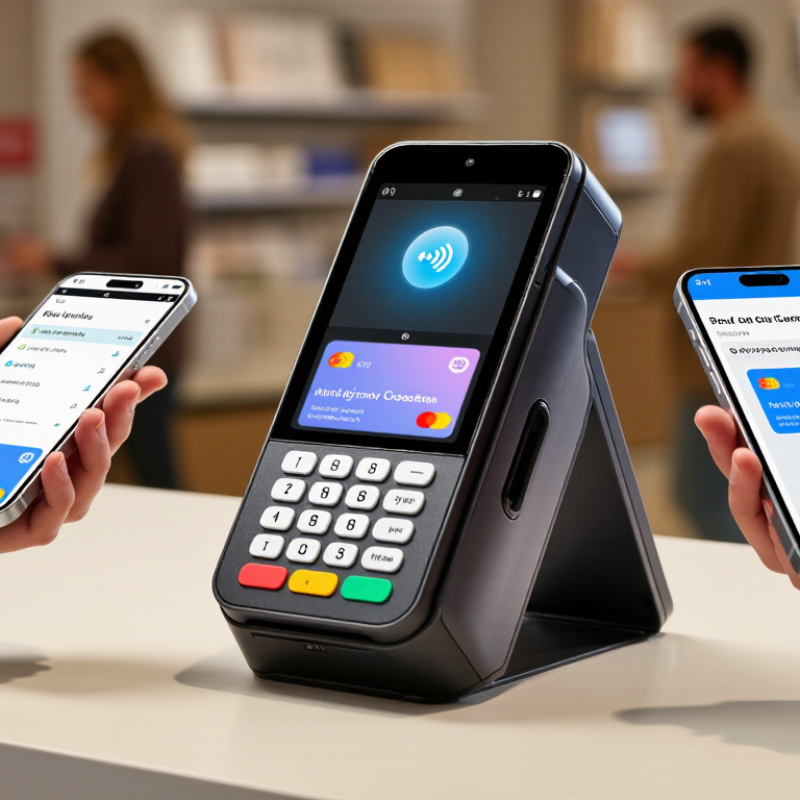
Buyers increasingly expect one compact terminal to support EMV contact cards and NFC transactions. EMV focuses on secure chip-based payment workflows. NFC enables short-range, contactless communication. The 13.56 MHz frequency supports many NFC applications, but it does not define every payment requirement by itself.
Experienced suppliers in China usually begin with the operating environment, not only the reader’s appearance.
A checkout counter may need a durable contact slot, a clear status light, and stable USB or serial communication. A vending cabinet may require a smaller module and stronger protection against dust. During evaluation, procurement teams should test card insertion, tap distance, transaction speed, and recovery after interrupted power. Small details matter.
A reader can pass a laboratory test and still perform poorly in a busy store.
Metal surfaces may reduce contactless sensitivity. Thick phone cases can shorten the practical reading distance. Firmware updates may also affect integration timing. These issues deserve documented testing with real cards and mobile devices. Suppliers should provide technical files, interface specifications, security evidence, and regional certification support. However, paperwork is not field experience. Buyers should request sample units and record results under heat, vibration, network delay, and repeated daily use. A few overlooked seconds can disrupt an entire payment queue.
China Supplier Landscape: OEM Capacity, Export Reach, and 2024 Market Metrics
China’s card-reader supplier landscape is shaped by dense OEM networks, flexible tooling, and export-oriented assembly. Suppliers commonly support contactless, chip, magnetic-stripe, and mobile connectivity in one compact terminal. Factory audits should examine calibration records, firmware controls, and final inspection rates. A polished sample proves little.
Worldpay’s Global Payments Report 2024 found digital wallets represented 50% of global e-commerce value and 30% of point-of-sale value in 2023. This shift increases demand for readers that process contactless payments quickly, even in crowded retail counters. EMVCo’s 2024 industry statistics also show continued global expansion of chip-based acceptance. China-based manufacturers can respond through modular OEM designs, multilingual software, and region-specific certification support.
Export reach remains broad across Asia, Europe, Africa, and Latin America, but delivery performance varies by compliance workload and customization depth. Industry purchasing teams often compare 30-day pilot output, not only quoted unit prices. That is sensible. Yet public data rarely separates Chinese OEM shipments from trading-company volumes, which makes market rankings imperfect. The 2024 Nilson Report and regional payment studies provide useful demand signals, but they do not fully measure factory capacity. Buyers should verify production lines, spare-parts stock, warranty procedures, and documented testing before committing to large orders. Metrics matter. Evidence matters more.
China Top Card Reader Machine Suppliers Worldwide
China Supplier Landscape: OEM Capacity, Export Reach, and 2024 Market Metrics
Asia-Pacific represented the largest regional opportunity for payment-terminal and card-reader hardware in 2024, supported by high transaction volumes, expanding digital-payment adoption, and strong electronics manufacturing capacity. Europe and North America remained important replacement and contactless-upgrade markets, while Latin America and the Middle East & Africa showed faster long-term adoption potential from a smaller installed base.
Data note: Rounded 2024 regional estimates synthesized from publicly available payment-terminal market studies, electronic-payment statistics, and international trade data. Values represent hardware-market opportunity in USD billions and exclude company-level results.
How to Evaluate Suppliers Across 8 Core Performance and Cost Criteria
Choosing card reader machine suppliers worldwide requires more than comparing unit prices. Evaluate eight criteria: payment acceptance, EMV and contactless support, security, connectivity, uptime, integration, total cost, and service. The 2024 Global Payments Report found digital wallets represented 30% of global point-of-sale payment value in 2023. Readers must handle tap-to-pay reliably. Ask for approval records, not vague “global compatibility” claims. PCI DSS alignment matters, but its scope needs careful verification.
Request measured uptime, transaction latency, battery endurance, and failure rates from similar deployments. A busy counter needs fast reconnection after weak Wi-Fi. Confirm SDK quality, API documentation, receipt options, and terminal compatibility. Compare landed costs over three years. Include hardware, software, gateway, replacement, training, and support fees. The PCI Security Standards Council’s PCI DSS v4.0.1 emphasizes stronger authentication and targeted risk analysis. Supplier questionnaires are not enough. Ask for penetration-test summaries and update procedures. Low bids can become expensive after exclusions appear.
Tips: Score every criterion from one to five. Weight security and uptime more heavily. Test five devices in a real store. Record failed taps and reconnection time. Check support outside office hours. Read warranty exclusions carefully. Do not trust a perfect spreadsheet. Pilot data may remain incomplete across countries and networks. Recheck taxes, certifications, and local acquiring requirements before signing.
Top Supplier Categories: POS, ATM, Transit, and Mobile Card Readers
China’s card reader machine suppliers serve four practical markets: POS, ATM, transit, and mobile payment equipment. Each category demands different hardware priorities. A retail POS reader needs quick contactless acceptance, a clear display, and stable connectivity. It may process hundreds of daily transactions beside a busy checkout counter.
ATM readers require stronger physical protection and carefully controlled card insertion. Suppliers should provide tamper-resistant designs, secure key management, and documented testing records. Transit readers face another challenge. They must handle repeated taps, crowded stations, dust, vibration, and short transaction times. A reader that works well in a shop may struggle at a station gate.
Mobile card readers focus on portability. Lightweight housing, Bluetooth or cellular support, battery endurance, and simple pairing matter greatly. During supplier checks, buyers should inspect sample units, firmware update procedures, warranty terms, and technical response times. Certification documents also deserve close review, not casual acceptance.
In my experience, demonstrations can hide weaknesses. Test devices during peak-like conditions. Ask for failure-rate data. No supplier fits every deployment. Buyers may also overlook language support and spare-part availability. That can create avoidable delays after installation. A reliable supplier explains limitations clearly and provides traceable quality records. Still, every claim should be verified through independent testing and a small pilot order.