How to Choose the Best Card Reader for Your Business Needs?
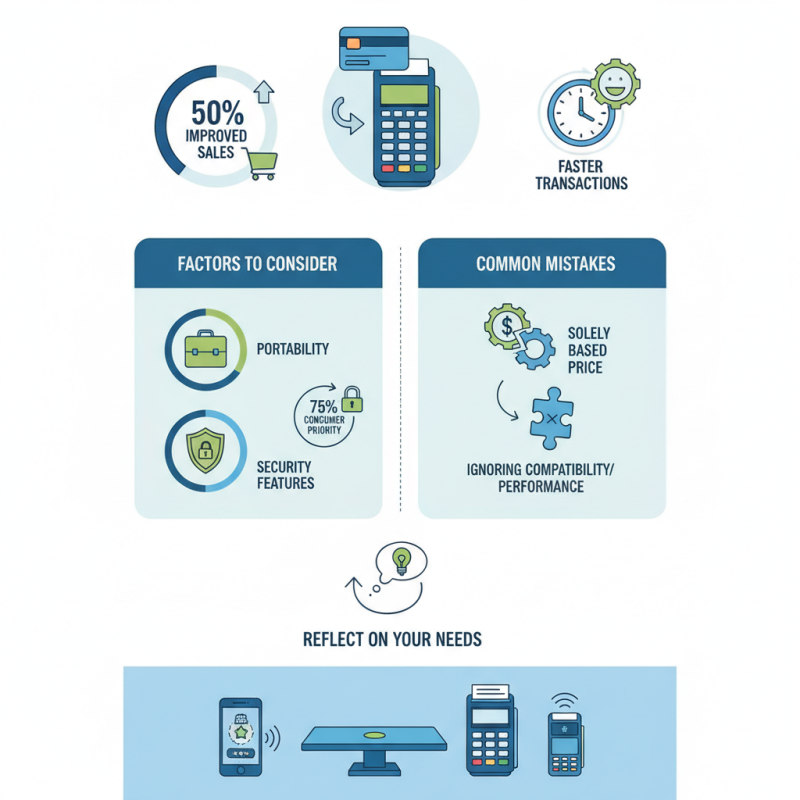
Choosing the right card reader can significantly impact your business operations. A recent study shows that 50% of small businesses report improved sales after upgrading their payment processing systems. The right card reader not only enhances transaction speed but also boosts customer satisfaction. In a world where digital payments are rising, businesses must adapt.
There are several factors to consider when selecting a card reader. For instance, portability is essential for on-the-go sales. Meanwhile, security features are crucial to protect sensitive customer data. A survey revealed that 75% of consumers prioritize security in their payment methods. However, many businesses still overlook these vital aspects.
It is easy to feel overwhelmed by the variety of options available. Some businesses may choose a reader solely based on price, ignoring performance or compatibility. This approach can lead to long-term inefficiencies. Reflecting on your specific needs will help identify the best card reader for your business.
Understanding Different Types of Card Readers Available in the Market
When selecting a card reader for your business, it's crucial to understand the various types available. There are
mobile readers that connect to smartphones or tablets via Bluetooth or audio jacks. These are ideal for small businesses,
allowing mobility without the need for bulky equipment. They usually operate through an app that securely processes transactions.
Another option is countertop readers. These devices are commonly found in retail settings. They offer fast
transaction speeds and often support chip and contactless payments. However, they can be less portable. Businesses with high foot traffic often favor these for their
efficiency.
Finally, there are integrated readers. These systems connect directly to point-of-sale (POS) systems. They provide a seamless
experience but may involve more complex setup processes. Some might find the integration challenging. It’s essential to weigh these factors against your operational needs.
Make sure to research each type carefully before making a choice. Think about your customer environment and transaction volume.
Evaluating Key Features to Consider in Card Readers for Business Use
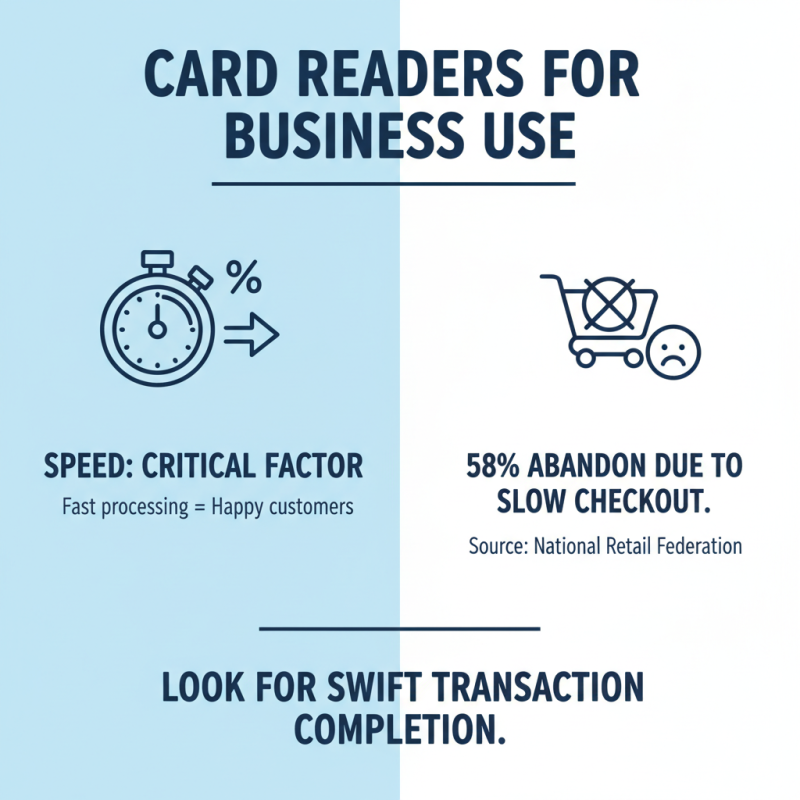
When selecting a card reader for business use, evaluating key features is essential. Speed is a critical factor. Fast processing times can enhance customer satisfaction. A study from the National Retail Federation states that 58% of customers abandon purchases due to slow checkout. Thus, look for readers that offer swift transaction completions.
Security features cannot be overlooked. With increasing cyber threats, data protection is paramount. According to a report by McKinsey, 67% of businesses worry about payment fraud. Opt for card readers that have built-in encryption and compliance with PCI regulations. These features significantly reduce the risk of data breaches.
Another important aspect is compatibility with different payment methods. Businesses today accept various receipts, from credit cards to mobile wallets. A versatile reader caters to diverse customer preferences. However, keep in mind the learning curve for staff. If a reader is too complex, training can be time-consuming, hindering operations. Consider the balance between features and usability for optimal performance.
Assessing Compatibility with Existing Payment Systems and Software
When choosing a card reader for your business, compatibility is key. Consider your current payment systems and software before making a decision. If your existing setup is cumbersome, integrating a new card reader can be a challenge. You need a device that works seamlessly with your current processes, ensuring efficiency.
Tips: Look for card readers that support multiple payment types. This versatility can enhance customer satisfaction. Also, check if the card reader can integrate with your accounting software. A smooth connection between your sales and finance reduces errors.
Moreover, pay attention to software updates. Some devices may not support the latest payment technologies. This could lead to complications down the line. It’s essential to reflect on how often you upgrade your systems. A reader that becomes obsolete can hinder growth.
Compatibility with existing systems fosters trust and reliability. Investigate user reviews to understand potential issues. A card reader might offer incredible features, but its effectiveness hinges on how well it fits into your ecosystem. Aim for a harmonious integration, as it lays the groundwork for a successful operation.
How to Choose the Best Card Reader for Your Business Needs?
| Feature |
Value |
| Compatibility with Payment Systems |
iOS, Android, POS Systems |
| Connection Type |
Bluetooth, USB, Wi-Fi |
| Supported Payment Types |
Chip, Magstripe, NFC |
| Transaction Fees |
1.5% - 3.5% per transaction |
| Monthly Fees |
$0 - $30 |
| Device Size |
Compact, Handheld, Full-size |
| Customer Support |
24/7, Business Hours, Online Resources |
| Payment Processing Speed |
Instant, 1-3 Days |
| Battery Life |
1 Day, 1 Week, Rechargeable |
Analyzing Costs: Buying, Leasing, and Transaction Fees of Card Readers
When selecting a card reader, understanding costs is crucial. Buying a card reader typically involves a one-time purchase. This can be appealing for businesses looking to minimize recurring fees. However, upfront costs can be substantial. Leasing is another option. It spreads payments over time, making it more manageable. This route may include service agreements, which can add to overall expenses.
Transaction fees are a major factor in your decision. These can vary widely. Some providers charge a flat rate per transaction, while others use a percentage model. Analyzing your average sales can help determine which option suits you better. A business with high sales volume may prefer lower percentage fees. Yet, a smaller operation could benefit from flat-rate pricing.
Reflection is necessary when calculating these expenses. Some businesses focus solely on the initial costs. They overlook the long-term implications of transaction fees. It’s smart to project these costs over time. What seems affordable at first could become a financial burden later. Assess your specific needs and usage patterns before making a commitment.
Reading Reviews and Recommendations for Reliable Card Reader Brands
When selecting a card reader for business needs, analyzing reviews is vital. Many businesses overlook customer feedback, which can provide invaluable insights. According to a recent industry report, 70% of users rank reviews as their top factor when choosing a card reader. This highlights the importance of reliable feedback in making informed decisions.
Consider the reliability of different brands based on user experiences. Consistent reports suggest that card readers with high accuracy and low failure rates are favored. Additionally, a study found that users who read multiple reviews were 60% more likely to choose a dependable card reader. Yet, some reviews may be misleading. Analyze both positive and negative feedback.
Moreover, pricing should be compared alongside reviews. Some users find cheaper options appealing but later regret their choices. Higher-priced models often deliver better performance and security features. According to trusted industry analysts, investing in a quality card reader can enhance transaction speed by up to 30%. This data underscores the significance of thorough research and consideration of user experiences when selecting the right device for your business.
Comparison of Card Reader Features