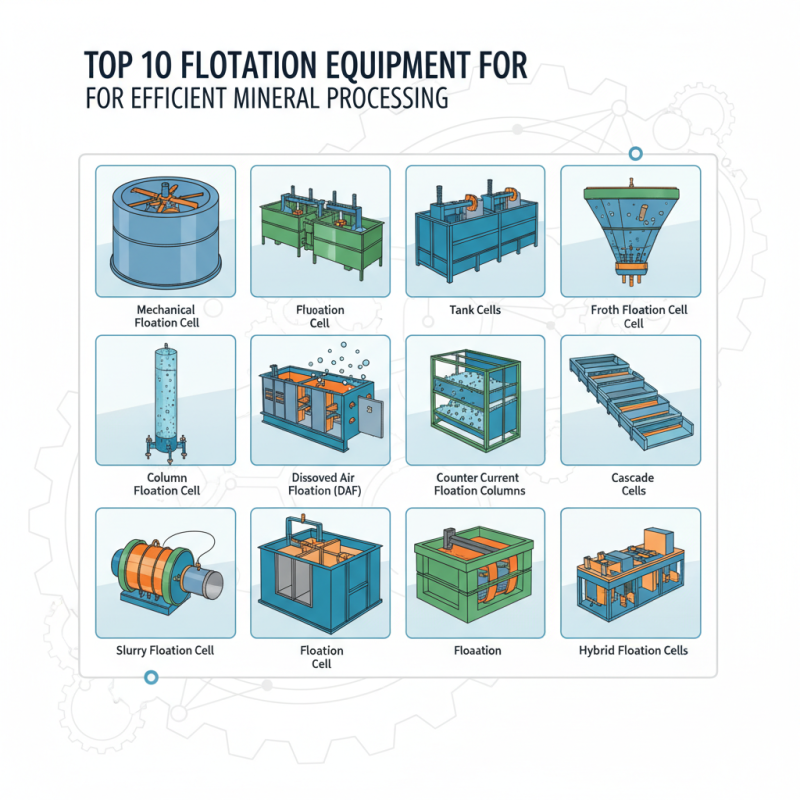
Top 10 Flotation Equipment for Efficient Mineral Processing?
Flotation Equipment plays a vital role in mineral processing. It separates valuable minerals from waste materials. This equipment enhances recovery rates and improves efficiency in extraction. Selecting the right flotation equipment can impact overall operations.
In the mineral processing sector, numerous options exist. Each type of flotation equipment offers unique features. However, the challenge lies in choosing the optimal solution for specific needs. Not all equipment performs equally well in every environment. Therefore, understanding equipment capabilities is crucial.
Furthermore, advancements in flotation technology continue to emerge. Innovations lead to more efficient designs and operations. However, they may also introduce complexity. Continuous evaluation of these technologies is necessary to stay competitive. Ultimately, the right flotation equipment can significantly influence your success in mineral processing.
Overview of Flotation Equipment in Mineral Processing
Flotation equipment plays a vital role in mineral processing. It allows for the separation of valuable minerals from ores. This process is essential in industries such as mining and recycling. The right flotation equipment can greatly enhance recovery rates and efficiency.
There are various types of flotation cells used today. Each type has its unique advantages and challenges. Some may have better selectivity, while others are more efficient with large volumes. The design and operational parameters of these cells can significantly affect performance. It's worth noting that not all equipment may perform well under every condition. Testing and adjustments are often necessary.
Proper maintenance is also crucial for optimal function. Regular inspections can prevent unexpected downtimes. However, many operations overlook routine care. It's common to see machines running at suboptimal levels due to neglect. Addressing these issues can lead to improved productivity and fewer operational setbacks. Being aware of these factors can make a significant difference in mineral processing outcomes.
Top 10 Flotation Equipment for Efficient Mineral Processing
| Equipment Type | Application | Capacity (m³/hr) | Power Consumption (kW) | Key Features |
| Mechanical Flotation Cell | Non-ferrous metals | 2-100 | 15-120 | High shear, customizable impeller |
| Column Flotation Cell | Coal and iron ore | 5-50 | 10-40 | High density and low footprint |
| Flotation Reagents | General flotation | N/A | N/A | Enhance selectivity and recovery |
| Jameson Cell | Lead, zinc, and copper | 2-30 | 20-80 | High efficiency and low operating costs |
| CF-500 Flotation Cell | Copper and nickel | 10-100 | 30-150 | Simplicity in design, low maintenance |
| Flash Flotation Cell | Gold recovery | 1-20 | 15-50 | Rapid flotation for fine particles |
| Tank Cell | Phosphate flotation | 5-80 | 18-120 | Versatility, adjustable aeration |
| Olds' Flotation Machine | Mineral concentrates | 2-15 | 12-45 | Compact design, easy operation |
| Dissolved Air Flotation (DAF) | Wastewater treatment | 10-100 | 20-100 | Removes suspended solids effectively |
| Electroflotation Unit | Metallurgy and wastewater | 1-10 | 15-60 | Uses electric current for effective flotation |
Key Characteristics of Effective Flotation Machines
Effective flotation machines are essential in mineral processing. Key characteristics play a crucial role in their success. High aeration rates, for instance, can enhance recovery rates significantly. According to recent industry reports, optimal aeration contributes to a 15% increase in recovery of valuable minerals.
Another key aspect is the design of the flotation cell. A well-designed cell can improve froth stability, allowing for better separation of minerals. Stability is often affected by the size of the bubbles generated. Smaller bubbles tend to attach more effectively to mineral particles. A study indicated that cells generating bubbles smaller than 1 mm showed a 20% improvement in recovery.
Energy efficiency is also a critical factor. Modern designs use less energy while maintaining high operational efficiency. This efficiency is vital in reducing overall operational costs. However, not all machines meet the required benchmarks in terms of energy savings. Continuous assessment and innovation in design are necessary to ensure machines remain effective in evolving processing environments.
Top 10 Flotation Devices for Enhanced Mineral Recovery
Flotation devices play a crucial role in the mineral recovery process. These tools enhance the separation of valuable minerals from gangue material. According to recent reports, effective flotation can increase recovery rates by 10-20%. This significant boost highlights the importance of selecting the right flotation equipment.
Various types of flotation devices exist, each with unique features. Column flotation cells are known for their efficiency and can achieve higher grades of concentrate. Meanwhile, mechanical flotation cells are popular for their robust design. However, the choice of equipment should be based on specific mineral characteristics and operational requirements. Not all devices work well for all minerals.
Tips: Regular maintenance of flotation devices is essential for optimal performance. Ensure that wear parts are replaced timely. Train staff on best practices to minimize operational errors. Balancing froth levels is critical. Flotation can sometimes yield suboptimal recovery if not monitored closely, requiring consistent evaluation.
Comparative Analysis of Flotation Technologies
Flotation technology has evolved significantly over the years, impacting mineral processing efficiency. Various flotation equipment types are now available, each with unique characteristics. These include pneumatic flotation, column flotation, and mechanical flotation cells. Each method offers specific advantages in terms of scalability, energy consumption, and recovery rates.
Pneumatic flotation systems often provide higher bubble surface area, enhancing particle attachment. However, their complexity can be a drawback. In contrast, column flotation is known for better separation in finer particles. Yet, it may require careful control of operating parameters to maximize efficiency. Mechanical cells are widely used due to their straightforward design, but they might not perform as well with viscous slurries.
While analyzing flotation technologies, one must consider the adaptability of each method under varying mineralogies. Some technologies excel in copper processing but underperform in gold extraction. This variability creates a need for tailored solutions in different contexts. Ultimately, understanding these nuances leads to more effective mineral processing strategies while highlighting the necessity for ongoing innovation in flotation technology.
Future Trends in Flotation Equipment Development
The future of flotation equipment in mineral processing is evolving rapidly. Recent industry reports highlight a demand for more efficient and environmentally friendly technologies. According to a 2022 study by the International Mineral Processing Council, the global flotation equipment market is projected to grow at a CAGR of 5.8% through 2030. This growth is driven by increased mineral recovery rates and reduced operational costs.
New advancements are focusing on automation and real-time data analytics. Automated flotation systems improve performance by optimizing air flow and reagent dosage. Studies indicate that these systems can boost metal recovery rates by 15-20%. However, the integration of such technologies raises concerns about data security and potential system failures. Balancing automation while maintaining operator expertise remains a challenge.
Moreover, sustainability in flotation processes is gaining attention. The push for greener technologies is prompting research into biodegradable reagents. Reports show that traditional chemicals used in flotation can lead to environmental hazards. Developing safer alternatives is vital to meet stricter regulations and public expectations. Industry professionals must reflect on their practices to adopt these innovations responsibly. Exploring these trends reveals both potential and complexity in the future of flotation equipment.