
How to Choose the Best Magnetic Sunglasses?

Choosing the right Magnetic Sunglasses is more than matching a frame with your face. It involves optical performance, comfort, durability, and trustworthy product information. The World Health Organization’s World Report on Vision estimates that at least 2.2 billion people live with vision impairment globally. This figure makes everyday eye protection a practical concern, not merely a fashion decision. However, sunglasses cannot replace professional eye care.

Market research also shows strong demand for eyewear that combines vision correction and sun protection. The Vision Council’s consumer reports consistently identify sunglasses as a widely used eyewear category in the United States. That demand has encouraged brands to offer magnetic clip-ons, interchangeable lenses, and prescription-compatible designs. Yet convenience can hide weaknesses. A clip may feel secure indoors, then shift when cycling, walking, or sweating outdoors.

This guide examines the details that buyers often overlook. Lens coverage matters. UV protection matters more. Look for clear product claims, reliable testing, and compliance with recognized standards such as ISO 12312-1 or ANSI Z80.3, where applicable. Polarized lenses may reduce reflected glare from roads and water, but they do not automatically guarantee full ultraviolet protection. That distinction is easy to miss.

Real-world testing is still valuable. Check whether the magnets align evenly and whether the bridge leaves pressure marks after an hour. Some frames look elegant online but feel heavy on the nose. I have found that “universal fit” is rarely universal. The best choice balances optical needs, daily habits, face shape, and honest manufacturer evidence.
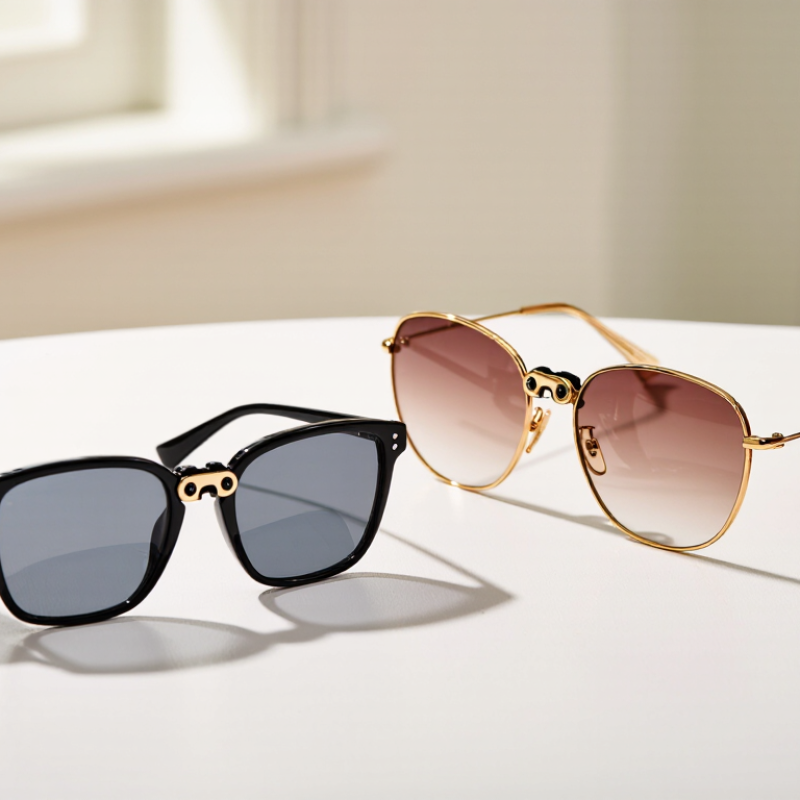
How to Choose the Best Magnetic Sunglasses?

Define UV Needs: UV400 Protection Covers Wavelengths Up to 400 nm

How to Choose the Best Magnetic Sunglasses?

When choosing magnetic sunglasses, check UV protection before color, style, or polarization. UV400 protection covers ultraviolet wavelengths up to 400 nanometers. This range includes most UVA and UVB radiation reaching the eyes. Dark lenses alone cannot guarantee protection. Some very dark lenses may only reduce visible brightness.

Look for clear UV400 labeling on the magnetic lens, not only on the base frame. Reliable sellers should provide testing details or compliance information. The lens should sit evenly over your regular glasses, with minimal side exposure. Strong magnets also matter. A loose attachment can shift while walking, cycling, or driving.

Polarized lenses can reduce reflected glare from wet roads and windows. However, polarization is not the same as UV protection. A lens can be polarized without blocking sufficient ultraviolet radiation. This distinction is easy to miss.

Fit matters more than expected.

Try the glasses outdoors for several minutes. Notice whether light enters around the edges or the magnetic panel moves. A slightly imperfect fit may still feel comfortable indoors, yet perform poorly under bright sunlight. That is a point worth reconsidering before purchase. UV400 is an important standard, but dependable protection also requires sound lenses, accurate labeling, and stable coverage.

How to Choose the Best Magnetic Sunglasses? - Define UV Needs: UV400 Protection Covers Wavelengths Up to 400 nm

UV Dimension Wavelength Range Why It Matters What to Look For in Magnetic Sunglasses Practical Check
UVA 315–400 nm UVA reaches the Earth’s surface and can pass through haze and clouds. Long-term exposure contributes to eye and skin damage. A clearly stated claim of protection through 400 nm, commonly expressed as “UV400” or “100% UVA/UVB protection.” Check the product label, packaging, or test documentation rather than relying on lens darkness.
UVB 280–315 nm UVB is more strongly associated with sunburn and can contribute to photokeratitis, a painful sunburn-like injury of the cornea. Full UV protection that specifically includes UVB, not just a tinted or polarized appearance. Prefer measurable protection claims covering wavelengths below 315 nm.
UVC 100–280 nm UVC from sunlight is mostly absorbed by the atmosphere, but artificial UVC sources can be hazardous to the eyes and skin. For normal outdoor use, prioritize complete UVA and UVB protection. For artificial UVC environments, use purpose-designed protective equipment. Do not treat ordinary sunglasses as protection against germicidal lamps or welding-related UV hazards.
UV400 Claim Up to 400 nm A genuine UV400 claim indicates that the lenses are designed to block ultraviolet radiation through the upper limit of the UVA band. Look for UV400 supported by a recognized product standard, laboratory test, or clearly stated transmission specification. Remember that UV400 describes UV protection, not visible-light darkness, optical quality, or impact resistance.
Lens Tint Visible light, approximately 380–700 nm Tint reduces visible brightness but does not automatically block ultraviolet radiation. Choose tint level for comfort and conditions, while separately confirming UV400 protection. A dark lens without certified UV protection may allow harmful UV exposure while reducing the eye’s natural squint response.
Polarization Not a UV wavelength rating Polarized lenses reduce certain reflected-glare patterns, especially from roads, water, and other horizontal surfaces. Use polarization as a glare-control feature in addition to, not instead of, UV400 protection. Confirm both features independently because polarization alone does not define UV performance.
Magnetic Attachment Fit Not applicable Gaps between the magnetic overlay and the prescription frame can allow light to enter from the sides and may reduce comfort. Select a precisely aligned attachment with secure magnets and coverage that matches the underlying frame. Check alignment, stability, side coverage, and whether the overlay remains attached during normal movement.
Use Environment Outdoor daylight exposure varies UV exposure can occur on bright, cloudy, reflective, high-altitude, or snow-covered days. For everyday outdoor use, choose verified UV400 protection; for intense glare, add suitable tint and polarization. For driving, ensure the tint is appropriate for local regulations and does not excessively reduce visibility.

Selection rule: Choose magnetic sunglasses with independently verified UV400 protection first. Then evaluate lens tint, polarization, optical clarity, frame coverage, attachment stability, and suitability for the intended activity.

Compare Lens Types: Polarized Filters and Visible-Light Transmission Rates

Choosing magnetic sunglasses starts with the lens, not the attachment. In bright streets, polarized filters can reduce reflected glare from wet roads, windows, and water. They work by blocking much of the horizontally oriented light that causes harsh reflections. However, polarization does not automatically mean full ultraviolet protection. Check the product’s certified UV400 or equivalent protection statement before relying on it outdoors. That detail matters. A magnetic frame can be convenient, but weak alignment may leave gaps or create distracting edges. I would test the clip-on indoors first, checking whether it sits flat and does not touch prescription lenses.

Visible-light transmission, or VLT, gives a useful comparison for changing conditions. A lens transmitting 10 to 20 percent of visible light feels dark under strong midday sun. A 30 to 50 percent lens may suit driving, walking, or partly cloudy weather. Higher VLT allows more light through, but it can feel uncomfortable on bright snow or sand. Lower VLT is not always better; dark lenses can reduce comfort without improving visual sharpness. I once chose a very dark magnetic lens for a long drive and found shaded roads harder to read. Ask for measured VLT information, and check for color distortion or blurred edges before choosing.

How to Choose the Best Magnetic Sunglasses?

Comparing Polarized Filters and Visible-Light Transmission Rates

Visible-light transmission (VLT) indicates how much light reaches the eyes. Sunglass filter categories are defined by VLT ranges: Category 2 transmits 18–43%, Category 3 transmits 8–18%, and Category 4 transmits 3–8%. Polarization reduces reflected glare but does not determine VLT, so polarized lenses can exist across different filter categories. Category 4 lenses are not suitable for driving.

Match Magnetic Frames: Bridge Width, Lens Size, and Attachment Strength

How to Choose the Best Magnetic Sunglasses?

Magnetic sunglasses should match your prescription frame, not merely its color. Measure bridge width at the narrowest point between the lenses. A 1–2 mm mismatch can create pressure, gaps, or crooked placement. Lens height matters too. Oversized magnetic lenses may cover the frame poorly and reduce peripheral protection.

The World Health Organization reports that at least 2.2 billion people have vision impairment worldwide, making accurate eyewear fitting more than a style decision (WHO, World Report on Vision, 2019).

Measure carefully.

Use a millimeter ruler.

Compare the magnetic lens width with your frame’s total lens span. The attachment should sit evenly across both upper corners or along the bridge.

Strong magnets should hold the overlay during normal walking, but excessive force can stress delicate frames. There is no universal consumer rating for attachment strength, so test the fit by gently shaking the frame and checking for movement.

ANSI Z80.3 and ISO 12870 provide useful eyewear performance and frame-quality references, although they do not replace a fitting assessment.

Market growth also raises quality concerns. Grand View Research valued the global sunglasses market at more than USD 20 billion in 2022. More choices can mean inconsistent measurements.

I have found that printed size labels are sometimes imperfect. Recheck them against the actual frame. A comfortable bridge, centered lenses, and stable attachment matter more than marketing claims.

Check Safety Standards: ANSI Z87.1 and ISO 12312-1 Compliance

When choosing magnetic sunglasses, check safety standards before judging color, style, or magnetic strength. ANSI Z87.1 applies mainly to occupational eye protection and evaluates impact resistance, construction, and optical quality. If the glasses claim this standard, look for clear markings and supporting test information, not only a sales description.

ISO 12312-1 covers sunglasses and sunglare filters for general use. It addresses UV protection, transmittance, optical properties, and basic durability. These requirements matter during bright commutes, driving, hiking, or time near reflective water. However, ISO 12312-1 does not automatically mean the glasses are suitable for industrial work.

Magnetic lenses should also attach evenly, without gaps or movement. A loose lens can distract you at the worst moment. I once underestimated this detail, and the frame felt secure until walking in strong wind.

Tips:

Ask for the exact standard number and test scope. Check whether the claim applies to the complete sunglasses or only the base lens. Look for UV400 or equivalent verified protection, but do not treat printed wording as proof. Test the magnetic connection gently before outdoor use. The lenses should sit flat, switch smoothly, and preserve a clear view. Be cautious with vague phrases such as “professional grade.” They sound reassuring, but they explain very little. Standards are useful evidence, not a substitute for careful inspection.

Evaluate Daily Use: Optical Clarity, Hinge Durability, and Replacement Cost

How to Choose the Best Magnetic Sunglasses?

When evaluating magnetic sunglasses for daily use, optical clarity should come before appearance. Check the view near the lens edges, not only through the center. Blurred edges, uneven tint, or visible color shifts can become tiring during driving or walking. The magnetic front should sit evenly over the prescription frame. A slight misalignment may create glare and distracting reflections. Look for lenses with consistent coating and clear product specifications. In my experience, indoor testing is not enough. Bright outdoor light exposes weaknesses quickly.

Hinge durability also matters because daily removal creates repeated stress. Open and close the frame several times before buying. The movement should feel controlled, not loose or gritty. Small screws deserve attention. They can loosen after months of use. A flexible hinge may survive accidental pressure better, but flexibility alone proves little. I once focused too much on a strong-looking frame and ignored a weak hinge. That was a costly mistake.

Replacement cost is part of the real purchase price. Ask whether replacement lenses, magnetic fronts, nose pads, and screws are available separately. Check their prices before committing. A low initial price can become expensive after one scratched lens. Compatibility is also important; a replacement piece should align precisely with the original frame. Keep the answer in writing when possible. Availability may change, and assumptions are unreliable. A practical choice balances clear vision, dependable movement, and manageable replacement expenses.