How to Choose LED Display Screens at the 139th Canton Fair?
As the 139th Canton Fair approaches, many buyers will consider investing in LED Display Screens. These screens offer vibrant visuals and are crucial for businesses aiming to stand out. However, selecting the right LED display screen can be challenging amid numerous options.
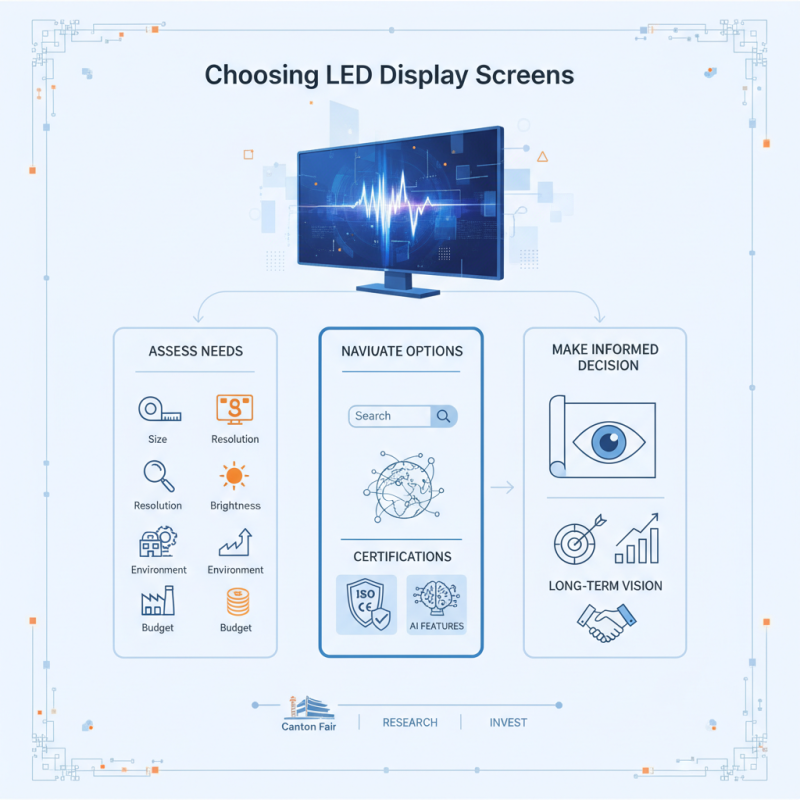
Buyers must assess their specific needs before making a decision. Factors like size, resolution, and brightness should be evaluated. For instance, a high-resolution display may be necessary for environments with bright lighting. Yet, not all buyers are aware of these specifications. They might overlook crucial details that could impact their investment.
Moreover, the AI features introduced at the Canton Fair serve as a game changer. Advanced search options help buyers pinpoint suppliers that meet specific credentials, like ISO or CE certifications. This innovation enhances efficiency but may cause buyers to rush their decisions. Reflecting on the importance of thoughtful selection is essential. Ultimately, the goal should be to choose an LED display screen that aligns with one's operational vision.
Understanding the Different Types of LED Display Screens Available
When exploring LED display screens at the 139th Canton Fair, it's essential to understand the different types available. LED screens come in various forms, each with unique functions. There are indoor and outdoor displays to consider. Outdoor screens are typically brighter and more durable. They can withstand weather changes. Indoor screens offer better resolution but are less rugged.
Another crucial aspect is pixel pitch. This term refers to the distance between pixels. A smaller pixel pitch results in a clearer image. Larger spaces might benefit from a higher pitch for visibility. Think about the viewing distance when choosing. Displays also vary in technology. There are SMD (Surface Mount Technology) and DIP (Dual In-line Package) options. SMD screens provide better color and clarity, while DIP screens can handle harsh environments.
User experience is another vital factor. Test displays in person if possible. Observe the brightness and color accuracy. The interface should be user-friendly. Sometimes, features come with complexities. Ensure that you can easily operate the screens if you purchase them. Researching thoroughly will help you avoid costly mistakes. Making a rushed decision could lead to regrets later.
Key Features to Consider When Selecting LED Display Screens
When selecting LED display screens at the 139th Canton Fair, understanding key features is essential. Brightness is crucial. It directly impacts visibility under various lighting conditions. A study from the Display Industry Association reveals that an optimal brightness level should be around 1000 nits for outdoor displays to ensure clarity.
Resolution is equally significant. A pixel pitch of 3mm or less is recommended for indoor use. Higher resolutions provide sharper images. The demand for high-definition displays has surged. According to recent market trends, the growth rate for high-resolution LED screens is projected to be 15% annually. This trend reflects evolving consumer expectations for clarity.
Additionally, consider the durability of the screens. Look for models with a high IP rating, ideally IP65 for outdoor use. This rating indicates resistance to dust and water. It’s important, as many exhibitors may face challenging environmental conditions. However, not all manufacturers provide clear information on longevity. Research and compare, as warranties can vary significantly. Some screens might not last as long as advertised.
How to Choose LED Display Screens at the 139th Canton Fair? - Key Features to Consider When Selecting LED Display Screens
| Feature | Description | Importance |
| Brightness | Measured in nits, the brightness indicates how clear the display will be under various lighting conditions. | High importance for outdoor displays. |
| Resolution | Refers to the pixel count. Higher resolution means a clearer and more detailed image. | Very important for events with close viewing distances. |
| Refresh Rate | The frequency at which the screen refreshes the display image, affecting motion smoothness. | Crucial for video content. |
| Viewing Angle | The angle from which the image quality remains acceptable; wider is preferred. | Important for large audiences. |
| Durability | Resilience to weather conditions and physical wear; essential for outdoor usage. | High importance for outdoor events. |
| Power Consumption | The amount of power the screen uses, affecting operating costs. | Important for long-term budget planning. |
| Connectivity Options | Types of connections available (HDMI, DVI, etc.) for ease of integration. | Essential for event setups. |
Evaluating the Quality and Performance of LED Display Screens
Evaluating the Quality and Performance of LED Display Screens at the 139th Canton Fair can be overwhelming. Numerous options are available, and not all screens are created equal. It's vital to assess the key features of each display. Resolution plays a significant role; higher resolution offers clearer images. Look for screens with at least full HD capability. This can make a noticeable difference in presentations.
Brightness is another critical factor. A screen with low brightness might struggle in well-lit environments. Generally, aim for a brightness level above 1500 nits. This ensures visibility in various settings. Pay attention to color accuracy as well. Check how vivid and vibrant the colors appear. Poor color reproduction can detract from your display’s impact.
Tips: Test screens in person. Observe how they perform in different lighting. Don’t hesitate to ask for sample footage to judge their quality. Look for warranties or support options. If a vendor can't offer this, it might raise a red flag. Consider energy efficiency too. A display that consumes less power can save you money in the long run. Choose wisely; your investment should resonate with your needs.
Comparing Prices and Budgeting for LED Display Screens
When attending the 139th Canton Fair, budgeting for LED display screens becomes crucial. You might encounter various price ranges. It's essential to have a clear budget in mind. Prices can vary based on size, resolution, and technology. A higher resolution screen often means a higher price. Consider what features are truly necessary for your needs. Sometimes, opting for a mid-range option may be wiser than chasing top-tier models.
Keep an eye on deals and discounts at the fair. Numerous suppliers may offer promotions to draw in buyers. Don’t hesitate to negotiate prices. Many vendors are flexible and open to discussions. It's important to balance cost with quality. A cheaper screen may cut initial expenses, but could lead to higher replacement costs down the line. Sometimes, spending a bit more upfront saves money later.
Reflect on your specific requirements. Are you looking for indoor screens or outdoor ones? Each type has different specifications and price points. Take the time to compare different models side by side. Use that opportunity to ask questions about warranties and after-sales support. It's a vital part of the purchasing process that is often overlooked.
Tips for Finding Reliable Suppliers at the Canton Fair
When attending the 139th Canton Fair, finding reliable suppliers is crucial for success. The LED display industry is growing rapidly, with a global market value projected to reach $43.8 billion by 2026. This growth underscores the importance of selecting trustworthy partners.
Approach each supplier with a critical eye. Look for manufacturers with solid references and proven track records. Check for certifications like ISO 9001, which indicates quality management practices. However, don’t rely solely on these labels. Sometimes, companies may provide documents that are outdated or even falsified.
Engage in conversations with different suppliers. Ask about their production capacity and delivery timelines. A supplier claiming to handle large orders might struggle with deadlines. Also, be mindful of communication. If a supplier is slow to respond, it could reflect on their service level. Clear and prompt communication is often a good sign.
It’s essential to visit booths that show real examples of their work. Product displays should be operational and offer clear visuals. Pay attention to details like color accuracy and brightness levels. If the displays have visible flaws, question the supplier’s quality standards. Trust your instincts and don’t hesitate to walk away if something feels off.